
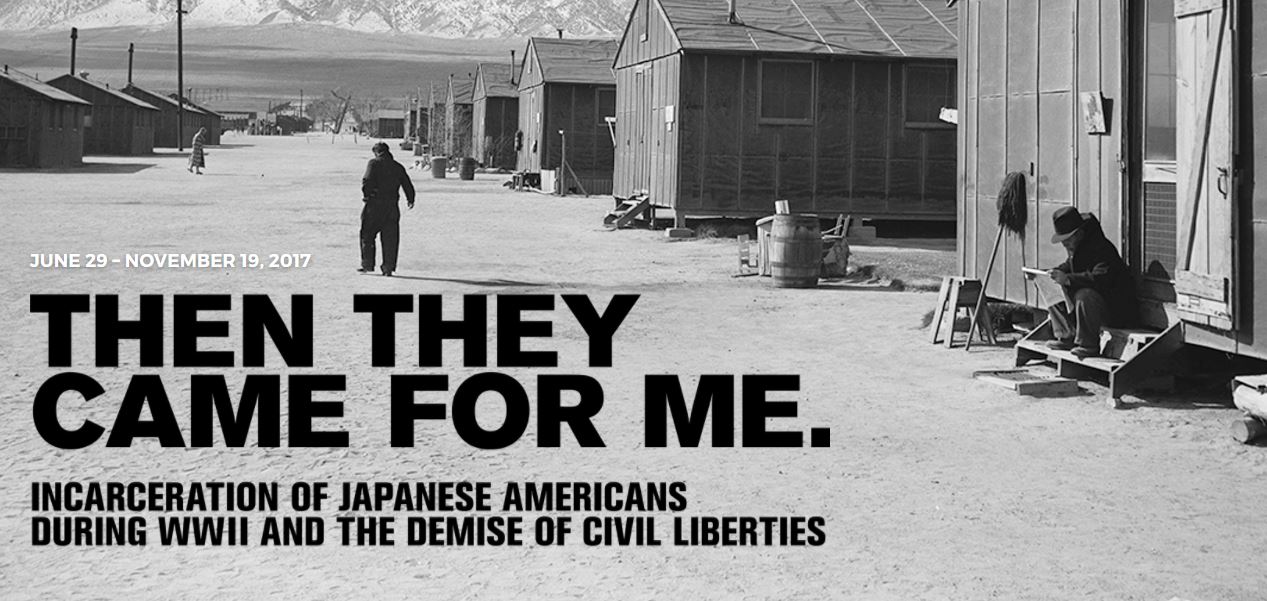
MBT’s history is tied to the incarceration and relocation of Japanese Americans in WWII
from the history of our temple:
-
- Arriving in the United States in 1937, Rev. Gyodo Kono was one of the dynamic issei (first-generation Japanese in America) Jodo Shinshu ministers who helped establish Buddhism in the United States. During World War II, he, along with thousands of individuals and families of Japanese descent (most were U.S. citizens), were sent to relocation and internment camps in remote locations of rural America. Following his release from the Rohwer Arkansas Relocation Camp, Rev. Kono moved to Chicago where he found many issei and young nisei (second-generation Japanese-Americans) also just released from the relocation camps.
-
- These ‘resettlers’ had been forced to make a difficult choice: Remain in the camps and await permission to return to the West Coast, or gain release under the condition they relocate to the eastern part of the United States.
-
- Many chose to start a new life in Chicago. Rev. Kono and other issei and nisei leaders saw the need to establish a place where “resettlers” could gather for Jodo Shinshu services as well as find a much-needed sense of community. Rev. Kono held the first service of the Midwest Buddhist Church (later renamed the Midwest Buddhist Temple) on July 10, 1944 at the South Parkway Community Hall on Chicago’s South Side.
About the Exhibition at Alphawood Gallery
Alphawood Gallery has partnered with the Japanese American Service Committee (JASC) to produce the Gallery’s first original exhibition, Then They Came for Me: Incarceration of Japanese Americans during WWII and the Demise of Civil Liberties. This exhibition examines a dark episode in U.S. history when, in the name of national security, the government incarcerated 120,000 citizens and legal residents during World War II without due process or other constitutional protections to which they were entitled. Executive Order 9066, signed by President Franklin D. Roosevelt on February 19, 1942, set in motion the forced removal and imprisonment of all people of Japanese ancestry living on or near the West Coast. During this 75th anniversary year of the executive order, we look back at this shameful past to learn lessons for our present and future in the face of new challenges encouraged by fearmongering and racism at the highest levels of government.
Find out much more including schedule, directions and related programs at the exhibit (more about the Alphawood exhibition)
Special Events
For MBT Nisei and Sansei – Share your story!
The Oral History Studio is a private space within the gallery where visitors are invited to record their personal stories or reflections. An Alphawood Gallery staff member is available to interview visitors who are willing to share their histories and thoughts related to the themes and questions posed by Then They Came for Me. Equipped with state-of-the-art audio and video recording equipment, the studio is available by walk-in (during scheduled hours) or by appointment. We encourage advance appointments, which can be scheduled by contacting Anna Takada at atakada@alphawood.org. Sessions may vary in length. Once recordings are processed, they will be archived and, if individual permission is granted, potentially made public on the Alphawood Gallery website. We hope you will consider sharing your story with us!